
Ooty
Queen of the Nilgiris — where the mist doesn't clear, it just moves.
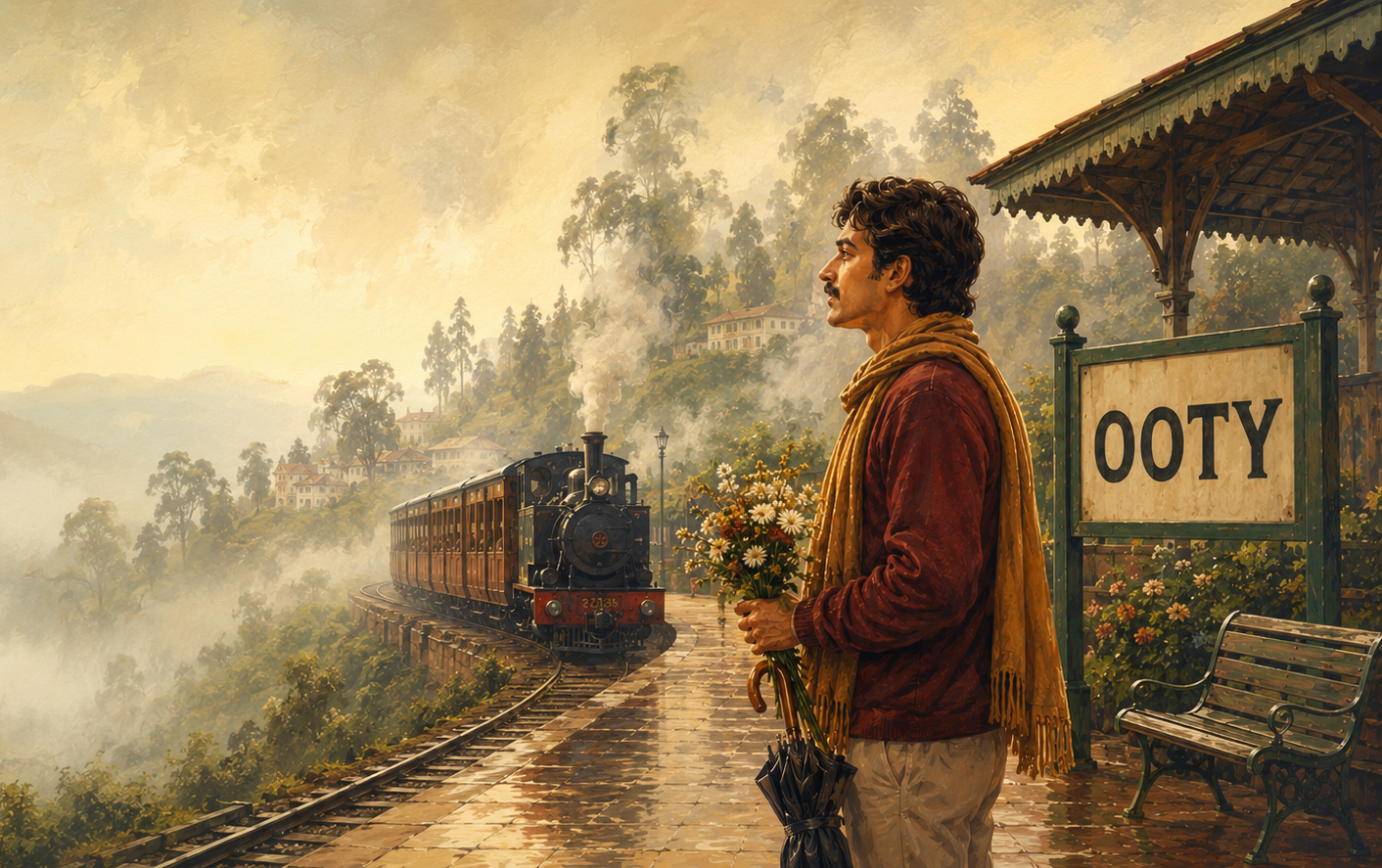
I've been waiting on this platform since the first whistle. If you're not the person I'm expecting… well, welcome anyway.
— Kannan, professional platform-waiter (occupation: hope)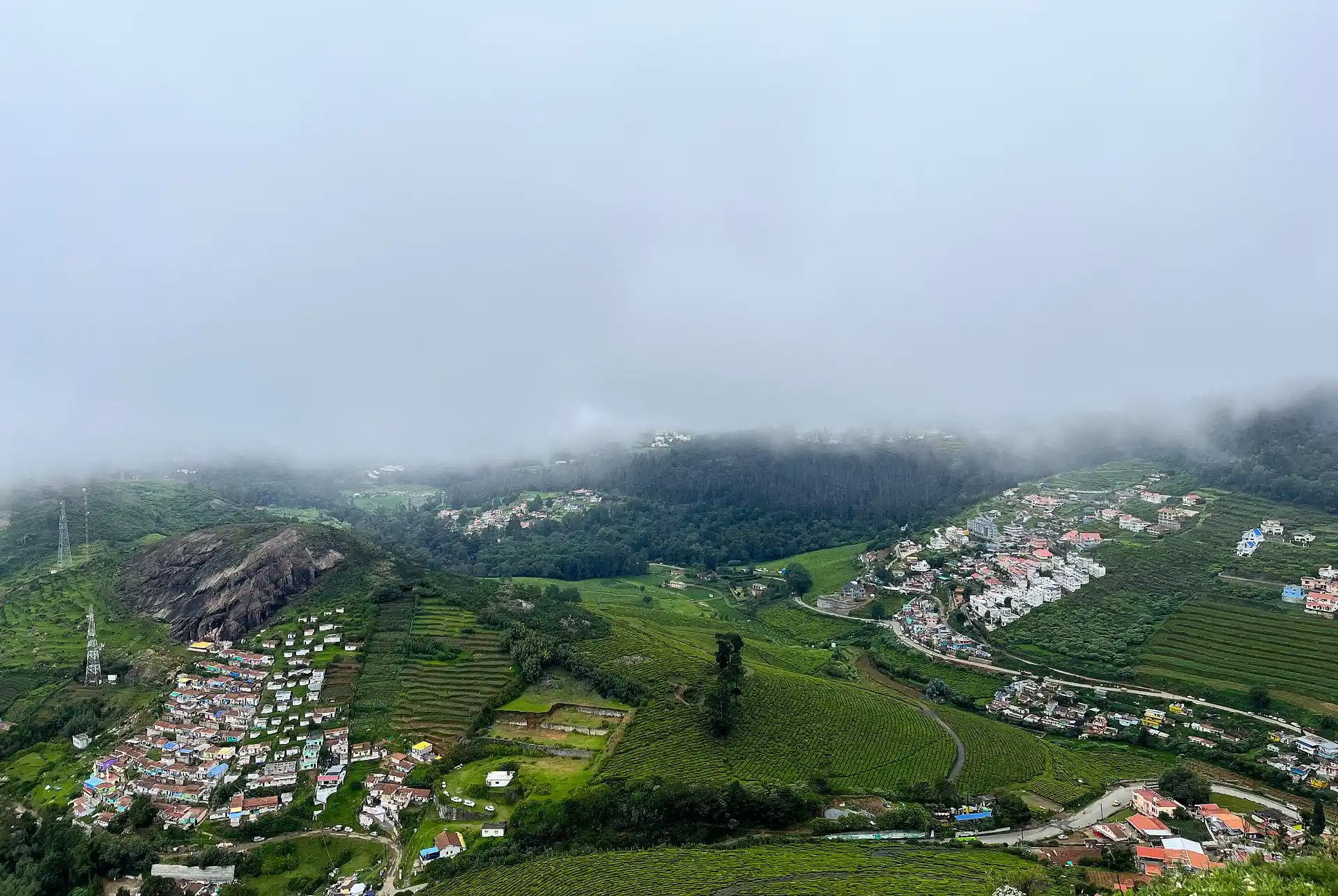 OOTY, TAMIL NADU
What to see
Drag or scroll sideways — each stop is timed from the town center.Doddabetta Peak
Highest point in the Nilgiris — arrive before 9am or the clouds get there first.
Ooty Lake
A boat ride at dusk, when the light goes copper over the water.
Nilgiri Mountain Railway
The toy train from Mettupalayam — book the window seat, not the aisle.
Government Botanical Garden
144 years old and still arguing with the hillside it's built on.
Where to sleep
Colonial hillside bungalow
Converted planter's bungalow with a working fireplace and a view of Doddabetta.
Tea-estate stay
Rooms set inside an active tea estate — you'll hear the pluckers before you see them.
Family-run lodge
Simple rooms near the lake, walk to everything, quilts thick enough to matter.
Where to eat
Table by table, the temperature outside stops mattering.Nilgiri-style pepper mutton
Slow-cooked with local pepper — book ahead, portions run out.
Varkey & fresh cream buns
A tradition from the British era that never left the hill.
Strong tea, roadside
The kind of stop you make on purpose, not by accident.
Estate-view multi-course
Slower service, better for an evening than a quick stop.
The Complete Picture
THE NAME AND LOCATION
The full name is Udhagamandalam. The British called it Ootacamund and later shortened it to Ooty. The word comes from the Toda language. Ooty sits in the Nilgiris district of Tamil Nadu. It is not in Kerala or Karnataka.
HEIGHT AND GEOGRAPHY
Ooty sits at 2240 meters above sea level. That is 7349 feet. The highest peak in the district is Doddabetta at 2637 meters. Doddabetta is 9 km from the Ooty town center. The Nilgiris range is part of the Western Ghats. The soil is laterite and loamy. Native shola forests sit on the higher ridges. The British planted eucalyptus for timber. Those trees consume heavy amounts of groundwater.
CLIMATE REALITY
March to June runs 15 to 25 degrees. This is peak season. The town fills up. Traffic blocks Charing Cross from 9 AM to 9 PM. You must book accommodation two months ahead. November to February runs 5 to 15 degrees. White frost forms on the grass in Ketti Valley and Thalaikundha at 6 AM. It does not snow in Ooty. The temperature stays above freezing in the town center. July to September brings heavy monsoon rain. Landslide risk increases on the Kalhatti Ghat. Mist blocks valley views for days.
WATER AND TRAFFIC
Ooty faces water shortages in April and May. The municipal supply from Pykara and Parsons Valley reservoirs drains under the tourist load. Hotels rely on private water tankers. You must conserve water during these months. Charing Cross to the Botanical Garden is 2 kilometers. In peak season that distance takes 45 minutes by car. The roads were built for horse carts. You park your car at your hotel. You take a shared auto for 20 rupees. They know the back routes.
DISTRICT RULES AND CHECKPOSTS
The Nilgiris district enforces a total ban on single use plastic. This is a strict district law. Officers at the Burliar checkpost on the Coonoor Ghat and the Kalhatti checkpost search your vehicle. They confiscate plastic bags and disposable bottles. They issue fines on the spot. You strip plastic packaging from your groceries before you reach the foothills. You carry steel or copper water bottles.
THE FLOWER SHOW AND MARKETS
The Ooty Flower Show happens every May at the Government Botanical Garden. It runs for three to four days. Traffic backs up to the lake road. You arrive before 8 AM to avoid the queue. The garden spans 55 acres and opens at 7 AM. The Ooty Municipal Market opens early. Vegetable sellers pack up by afternoon. You go before 10 AM for fresh produce. The Tibetan Market sits on Commercial Road. Most goods are imported. You look for an FSSAI number on chocolate labels. You pay 400 to 800 rupees per kilogram for genuine local product. You buy tea directly from estate shops. You ask which garden the leaf came from.
HISTORY AND PEOPLE
John Sullivan established Ooty as a settlement in 1819. The Nilgiri Mountain Railway reached Ooty in 1908. It uses a rack and pinion system to climb from Mettupalayam. The Ooty railway station code is UAM. You book tickets 120 days in advance on IRCTC. The Toda and Badaga and Kota communities lived here long before the British arrived. The Toda built half barrel shaped huts called munds. The Badaga farmed the terraced slopes. These communities still live here. You ask permission before photographing people. You stay on marked paths in tea estates. The population of Ooty town is around 88000. Tamil is the primary language.